
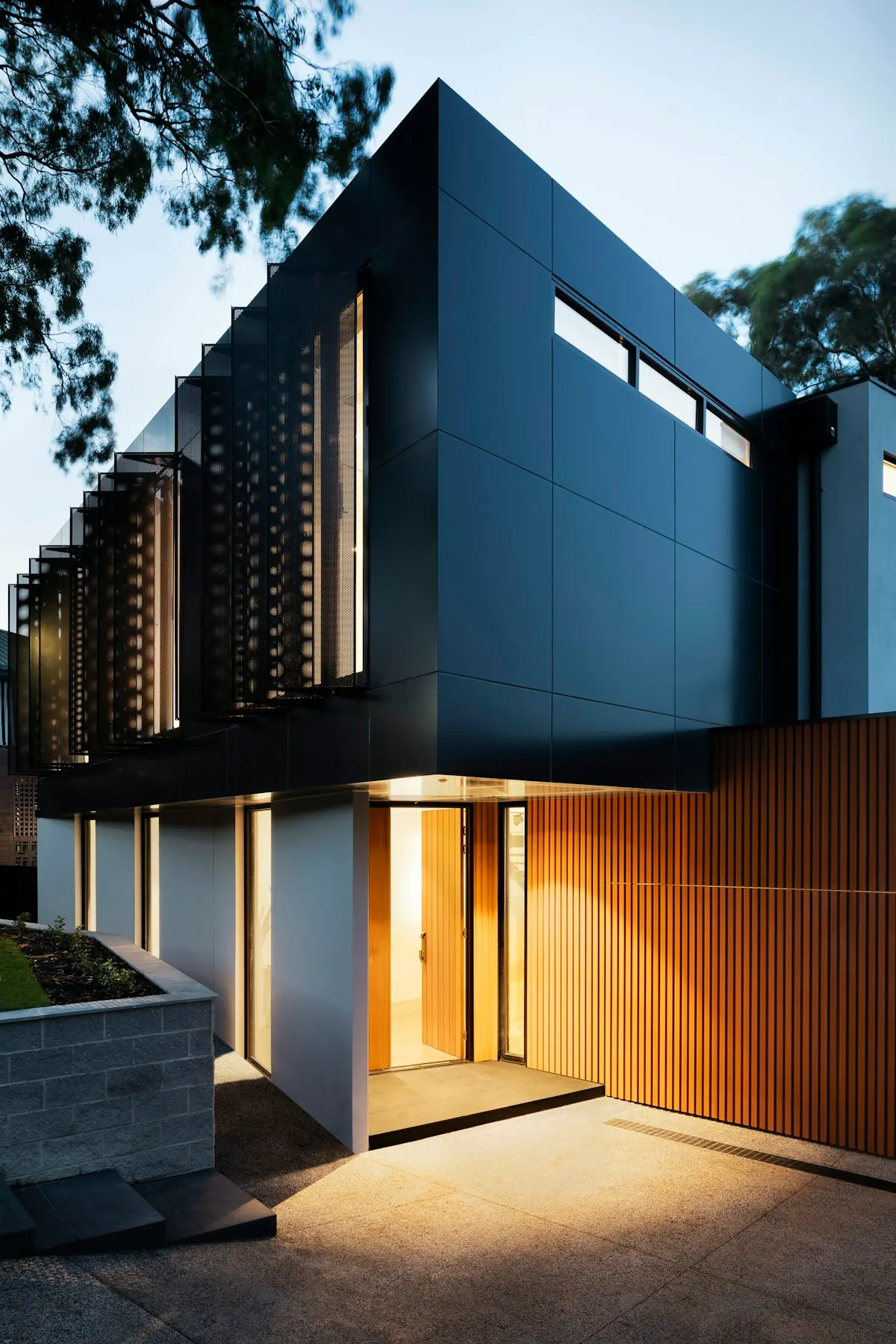
Cladding is a visible part of an exterior composition, but its role in the complete wall and weatherproofing strategy must be confirmed by the project team. Getting the rhythm right can turn a plain wall into a deliberate architectural feature.
Horizontal vs Vertical
Horizontal cladding creates a grounded, linear feel that visually widens a facade. Vertical orientation draws the eye upward and adds perceived height - ideal for single-storey homes or feature panels. Both orientations can be combined for contrast.
Proportion Matters
Board width, castellation depth and spacing create shadow lines that define the wall's character. Compare the exact profile in elevation before deciding whether a tighter or wider rhythm suits the facade.
Colour and Contrast
WoodEver cladding is currently listed in Walnut, White, Teak and Charcoal. Compare physical samples and the 219 x 26mm castellated face against render, masonry, roofing and landscaping in the project's real exterior light.
The Feature Wall
Not every wall needs cladding. A single feature wall or entry portal can create impact without overwhelming the design. Use cladding strategically - entries, courtyard walls, and street-facing facades deliver the most visual return.
Material Confidence
WPC cladding offers a manufactured, timber-inspired design direction. Final appearance, care and exterior suitability depend on the exact product, wall build-up, orientation and installation. Review the current cladding product page, compare samples and request the current technical and care information before specification.